Showing posts with label Finance. Show all posts

Building A Resilient Investment Portfolio In 2026

building resilient investment portfolio modern market

Key Takeaways

  • Diversify across assets and regions to reduce risk.
  • Align allocation with goals, risk tolerance, and timelines.
  • Include alternatives such as real estate or commodities to provide stability.
  • Manage risk with protective strategies and liquidity.
  • Rebalance regularly to maintain target allocations.
  • Use AI and technology for smarter, faster portfolio decisions.

Investors today face a rapidly changing financial landscape marked by global uncertainties, technological shifts, and unpredictable economic cycles. The global market is now more interdependent than at any point in history, with major economic, political, and climate events reverberating across borders at lightning speed. Ensuring your investment portfolio withstands these dynamics requires dedicated strategies and a forward-thinking approach that goes beyond traditional models. Whether you are planning for retirement, focusing on accumulating wealth, or seeking to safeguard family assets for future generations, clear frameworks and professional guidance, such as company equity planning, can help you build a portfolio that stands the test of time, no matter what challenges lie ahead.

Understanding how to create a resilient investment portfolio is more critical in 2026 than ever before. As markets become increasingly interconnected and volatile, the challenge for investors is to navigate continuous change while maximizing returns and minimizing risks. Adopting a comprehensive strategy, one that weaves together diversification, risk management, and advanced technology, will provide the confidence and flexibility needed to pursue your long-term financial goals. New global regulatory environments, faster-than-ever price movements in digital assets, and higher inflation in various economies mean that sticking to old strategies can expose you to greater risks than before.

Understanding Diversification

Diversification is the foundation of any resilient portfolio, acting as both your offense and your defense against unpredictable shocks. By spreading investments across different asset classes, industries, and geographic regions, investors can minimize the risk that any single holding will impact overall returns. Losing money in one area is easier to tolerate when gains in other sectors help offset declines, reducing the chance that short-term events will ruin long-term plans. This approach shields your wealth from sector downturns or market corrections that impact only a part of the global economy.

The rationale behind diversification is simple: different asset classes often react differently under the same economic conditions. When one area, such as technology stocks, underperforms due to regulatory crackdowns, others, such as consumer staples or bonds, may perform better, thereby stabilizing your overall results and reducing exposure to losses. Effective diversification means you are never overexposed to the risks associated with a single point of failure, giving you a smoother investment journey.

Asset Class Allocation

A thoughtfully balanced portfolio features a mix of stocks, bonds, and cash equivalents, each playing distinct roles in achieving your financial objectives. Conventional wisdom has long advocated a 60/40 split between equities and fixed income, but shifting global dynamics, such as rising interest rates, inflation concerns, and unpredictable economic cycles, have prompted many to rethink this model. According to a CNBC report, BlackRock now suggests investors look beyond the classic split and consider adding alternative investments for better diversification and potentially higher risk-adjusted returns.

Deciding your ideal allocation depends on your specific risk tolerance, investment timeline, and financial goals. Younger investors with decades to invest may feel comfortable taking on more equities in pursuit of higher growth, while those nearing retirement often seek the stability and income that bonds and cash provide. Significant life changes, such as marriage, having children, or approaching retirement, should prompt a reassessment. Reassessing your allocation annually ensures your investments stay aligned with your evolving objectives and market conditions, and helps you take advantage of new opportunities as they arise.

Geographic Diversification

Limiting investments to a single country exposes your portfolio to country-specific risks, including regulatory changes, currency fluctuations, and even natural disasters. These risks can devastate portfolios during crises. By expanding exposure to international markets such as Europe, Asia, and emerging economies, investors can balance the risk from localized events or downturns. For example, a slump in the U.S. economy might be partially offset by robust growth in Asia-Pacific or resilient performance in European markets, ensuring that your portfolio doesn’t rise or fall on the fate of a single region.

This strategy has become increasingly accessible through global mutual funds, ETFs, and international equities, making it easier for all investors to gain geographic diversification without direct overseas accounts. It also opens doors to new industries, innovative companies, and growing middle classes that may not be reflected in your home country.

Incorporating Alternative Investments

Alternative investments like real estate, commodities, hedge funds, infrastructure, and private equity do not always follow the same market trends as stocks and bonds, making them valuable for enhancing portfolio resilience. For instance, commodities such as gold can hedge against inflation and market uncertainty. At the same time, private equity and real assets provide access to sectors with potentially higher growth or stable, inflation-protected income streams. In times when equities fall, alternatives may hold their value or even increase. A Forbes feature underscores the benefits of integrating select alternative assets for stronger portfolio performance and stability.

Allocating even a small portion of your portfolio to alternatives can help dampen overall volatility, offer opportunities for higher returns, and provide exposure to unique growth drivers that are not directly linked to global stock market swings. However, it’s important to understand the specific risks, potential illiquidity, and complexities involved in these investments before taking action.

Risk Management Strategies

The best portfolios adapt to investors' unique risk tolerances and time horizons. Proactive risk management means not only choosing the right mix of assets but also using tools such as stop-loss orders, protective puts, and options that provide insurance against sudden downturns. Risk management also includes ensuring you are not overleveraged and that you have appropriate insurance coverage for non-market events that could impact your finances. Holding a healthy reserve of liquid assets, such as money market funds or short-term government bonds, ensures you are ready to take advantage of timely opportunities or meet unexpected cash needs without selling long-term positions at a loss.

Regularly assessing personal risk tolerance and life circumstances is critical to ensuring your portfolio remains suitable as you progress through different financial stages. As you achieve major milestones or encounter shifting economic conditions, your willingness and ability to take risks may change, requiring adjustments to your approach.

Regular Portfolio Rebalancing

Without disciplined rebalancing, asset classes that outperform or underperform can skew your intended asset allocation and, over time, your risk level. By periodically reviewing and restoring your original mix, selling appreciated assets and buying lagging ones, you systematically take profits and buy undervalued sectors while they trade at discounts. This rebalancing process helps maintain your portfolio's risk profile consistent with your long-term goals, regardless of short-term market sentiments or hype cycles.

Professional advisors recommend doing this at least annually, or when your allocation drifts significantly from its target due to outsized gains or losses across any asset class. The discipline of rebalancing can also help take emotion out of investing, forcing you to "buy low and sell high" automatically, rather than making reactive decisions during bouts of market excitement or fear.

Leveraging Technology in Investment Decisions

Advancements in artificial intelligence, machine learning, and robo-advisory platforms are transforming how modern portfolios are managed. These technologies process enormous datasets—from national economic reports to global news headlines and real-time price movements to identify patterns, forecast returns, and continuously optimize allocations. According to a recent Wall Street Journal analysis, investors using AI-powered tools enjoy faster insights and often better risk-adjusted returns compared to traditional methods, as AI can model thousands of scenarios and instantly adapt recommendations.

Technology-driven solutions offer greater customization, lower costs, and the ability to adjust investment strategies dynamically in response to current events, empowering investors to stay ahead in unpredictable environments. Many platforms even provide automatic rebalancing, tax harvesting, and real-time risk assessments, making sophisticated strategies more accessible to all investors.

Final Thoughts On Smart Stock Portfolios In The Modern Market And New Economy

Successfully building a resilient investment portfolio in 2026 demands more than simply picking a few diverse funds or stocks. It means systematically diversifying across asset classes and regions, integrating alternative investments, proactively managing risk, rebalancing regularly, and embracing the best available technological tools. By prioritizing these proven strategies and seeking guidance from experienced advisors when needed, investors can not only weather market turbulence but also position themselves to achieve sustainable, long-term growth.

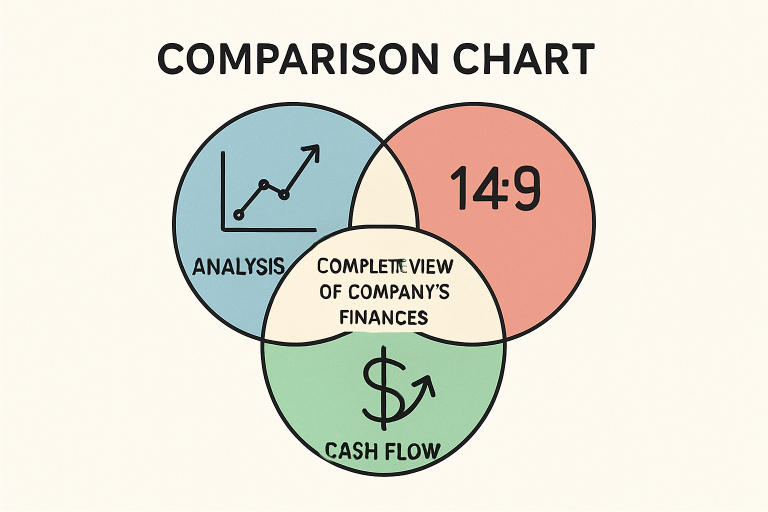
Comparative Approaches To Financial Analysis Methods

comparative approaches financial analysis methods

Key Takeaways:

  • Understanding various financial analysis methods enhances decision-making.
  • Each method offers unique insights into a company's financial health.
  • Combining multiple approaches provides a comprehensive financial overview.


The landscape of modern business relies heavily on data-driven decision-making, making financial analysis a crucial tool for organizations seeking to remain competitive. Financial analysis is the process of evaluating a company’s financial statements and related data to determine its overall performance and identify emerging trends. Business leaders, investors, and analysts depend on robust financial analysis to support strategies ranging from investment choices to internal operational improvements.

At its core, financial analysis reveals answers to critical questions—Is the business growing? Are profit margins sustainable? Can current assets cover liabilities? By analyzing historical data, benchmarking against market peers, and forecasting future performance, these methods provide a solid foundation for effective risk management and long-term planning. As financial landscapes become more complex, leveraging diverse methodologies is increasingly necessary to capture every facet of organizational well-being.

Financial analysis enables stakeholders to evaluate not only past and present performance but also a company’s resilience and adaptability in a rapidly changing marketplace. Approaching financial data from multiple perspectives reduces blind spots and helps organizations adapt to unpredictable economic shifts and evolving industry standards.

While the fundamentals of financial analysis remain unchanged, innovations in technology and methodology continue to advance the discipline. In this article, we explore the most common and modern approaches, examine their strengths and limitations, and highlight the benefits of combining different financial analysis techniques to obtain a truly comprehensive view.

Common Financial Analysis Methods

Businesses employ a range of financial analysis techniques, each providing distinct insights into an organization’s performance and potential. The most frequently used methods include:

  • Horizontal Analysis: This trend-focused method examines financial data over several periods, making it easy to spot long-term patterns in revenues, expenses, and profitability.
  • Vertical Analysis: By restating line items as percentages of a base figure (such as sales or total assets), vertical analysis facilitates side-by-side comparisons between companies of varying sizes or across departments within the same company.
  • Ratio Analysis: Ratio analysis distills complex financial data into key performance indicators, including liquidity ratios like current and quick ratios, profitability ratios like return on equity (ROE), and solvency ratios such as debt-to-equity.
  • Discounted Cash Flow (DCF): A forward-looking technique, DCF estimates the present value of an investment based on expected future cash flows, taking into account the time value of money.
  • Economic Value Added (EVA): EVA measures whether a company is truly generating value above the required rate of return for its investors, taking into account capital costs and highlighting economic profit rather than mere accounting profit.


Comparing DCF and EVA Methods

Two of the most widely discussed approaches in financial valuation are DCF and EVA, each addressing value from a unique perspective. DCF is lauded for its practicality and focus on future cash flows, making it a staple for investment managers and acquisition specialists. It offers a dynamic, forward-looking mechanism directly tied to the time value of money and risk assessment.

EVA, meanwhile, is more granular, measuring economic profit by subtracting a company’s cost of capital from its net operating profit after taxes. While theoretically robust, EVA is sometimes underutilized, especially among small to mid-sized enterprises due to its complexity and data requirements. Practitioners often favor DCF for its speed and ease of application, but may overlook valuable insights that EVA offers regarding true economic profitability and capital efficiency. A comprehensive comparison by the International Journal of Applied Economics, Finance and Accounting highlights these differences and discusses how both methods can serve different strategic purposes.


Integrating Financial Ratios with EVA

Traditional financial ratios are a mainstay in quick company health assessments, but on their own, they sometimes paint an incomplete picture. When integrated with EVA, these ratios help illuminate the specific drivers behind value creation and destruction within an organization. For example, a company may have strong profitability ratios. Still, if its EVA is negative, it reveals that actual wealth creation is not occurring after accounting for the opportunity cost of invested capital.

Research comparing financial ratios with EVA consistently underscores the benefits of integration. Ratios provide fast, actionable insights into short-term trends, while EVA uncovers deeper, sustainable performance.


Modern Techniques in Financial Analysis

Technological innovations and advanced statistical approaches are revolutionizing financial analysis. The Compositional Data (CoDa) methodology stands out as a powerful alternative to conventional ratio analysis. By recognizing the interdependence among financial statement components, CoDa addresses long-standing issues such as skewness, collinearity, and the impact of outliers, improving reliability in cross-company and cross-industry comparisons.

The proliferation of big data and predictive analytics is another pivotal trend. Firms are increasingly leveraging machine learning to uncover patterns and automate risk assessments, resulting in more intelligent, efficient, and accurate financial analysis processes.


Challenges in Financial Analysis

Despite a wealth of analytical tools, significant challenges persist in deriving actionable insights from financial data. Data complexity, inconsistent reporting standards, and unpredictable market environments can hinder analysis accuracy. The need for precise forecasting, integration of non-financial data, and adaptations to regulatory changes further complicate matters. As a result, continuing education and a flexible mindset are crucial for today’s financial professionals.

Embracing new analytical frameworks and technologies can offer solutions, but these come with their own learning curves and implementation challenges. Success in financial analysis ultimately relies on a strong foundational understanding of methodology, rigorous data validation, and an openness to evolving best practices.


Conclusion

Mastery of multiple financial analysis methods is essential for accurate company valuation and strategic decision-making. Leveraging both traditional and modern techniques enables organizations to navigate complexities, identify new opportunities, and mitigate risk. By embracing a comparative and integrated approach, financial analysts can ensure their insights are as comprehensive and actionable as possible.

The Impact Of Global Events On Your Finances

impact global events finances

Wars spark uncertainty, supply chains are affected by pandemics, and overnight policy changes redraw the financial landscape. These events alter the framework of your economy; they are more than just headlines. From your investment portfolio to the grocery stores, the shocks of global events land squarely at your door. Financial security depends on how flexible your plans are as the surroundings change, not only on your income or savings. Understanding those worldwide effects helps you respond, recalibrate, and stay ahead of financial disruption. 

Geopolitical Tensions Reconfigure The Flow Of Goods, Services, And Wealth 

When global conflicts escalate, the consequences extend beyond the countries directly involved. Political unrest frequently disrupts trade routes, drives up commodities prices, and causes stock markets to respond quickly and often unpredictably. Businesses suffer delays, lower supply, or increased costs that eventually impact customers as sanctions are imposed, and alliances change. The cost of energy typically rises first, then that of transportation and other essentials. Your budget tightens even if you live thousands of miles away. Understanding these signals helps you to plan better—by changing discretionary spending, analyzing investment exposure to foreign markets, and maintaining cash flow in expectation of rising living expenses. 

Currency Fluctuations Are More Than Numbers On A Chart—They Change What Your Money Is Worth 

Exchange rates fluctuate rapidly in response to global developments. When inflation soars in one area or a major economy raises interest rates, currencies adjust in response. This affects your purchasing power and investment returns in little but important ways, not only of concern for travelers or importers. These swings impact actual expenses whether you purchase internationally or hold assets in another currency. Currency fluctuations can even affect interest rates on domestic loans. Individuals engaged in forex day trading must constantly monitor global news, using short-term volatility to identify windows of opportunity that align with their strategies. From daily spending to long-term planning, the global value of money becomes a dynamic factor influencing everything. 

Natural Disasters And Health Crises Alter Economic Behavior And Reshape Consumption Trends 

Pandemics and natural disasters have a worldwide effect that goes much beyond the instantaneous loss of life or damage. These occurrences can cause labor markets to be disrupted, compel changes in workplace relationships, and supply chains for necessities to be upset. As observed in recent years, overnight abrupt demand surges for logistics, technology, and healthcare changed whole sectors. Businesses react quickly to these changes in pricing, service modification, or complete closure. Your financial choices also have to change to balance long-term effects with urgent requirements. While non- essential spending is reevaluated in the face of greater uncertainty, insurance coverage, emergency savings, and healthcare planning take on increasing relevance. 

Technological Shifts Accelerated By Global Crises Redefine Job Markets And Career Stability 

Innovation generally accelerates during times of global crisis as businesses look for adaptation and efficiency. Responding to crises-driven issues, new technologies replace more antiquated models and drive some employment into obsolescence. Already changing whole sectors, remote work, artificial intelligence, and automation have pushed professionals to reassess their skill sets. Job stability becomes related to how well you expect these changes and adjust your position. The financial effect of either staying ahead or becoming obsolete might determine your economic potential for years. Those who remain informed of global tech changes are better able to control professional instability and safeguard financial goals, whether by retraining, diversifying income sources, or creating remote-friendly careers. 

Governmental And Institutional Responses Influence Access To Credit, Investment Growth, And Inflation Control 

Governments step in with policies meant to either stabilize or boost when world events cause economic slowdowns or booms. From institutions trying to steer national economies through turmoil, interest rate adjustments, stimulus packages, tax reforms, and legislative changes flow directly. These changes touch everything, including your mortgage rate and the value of your retirement fund. Whether it is debt refinancing, postponing a big purchase, or reallocating your investment portfolio, knowing the intention behind these rules will help you make timely financial decisions. Policies developed in response to world events have long-lasting local consequences; hence, it is imperative to understand not only the event but also the subsequent actions. 

Conclusion 

Global events do not knock before they arrive at your financial doorstep; they enter uninvited and begin to reshape everything from prices to income sources. Maintaining financial resilience is about being flexible, knowledgeable, and ready to act—not about forecasting the next crisis. Every foreign disturbance presents a chance to improve your financial practices, enhance your plan, and confidently and clearly negotiate the changing terrain.

Guide To Same Day Small Business Loans

merchant cash advances same day small business loans

If you are a small business owner and need money fast, I wouldn’t turn to the banks in 2025. In fact, only 13% of businesses are being approved by the big banks. If you need working capital fast we can get you up to $25,000 the same day. Here are the best same day small business loans online. 

What Are Same Day Small Business Loans? 

If you are looking for same day working capital, chances are slim you will be approved by the banks, especially after the pandemic. Over 10 million small businesses shut down a few years ago due to the pandemic, and not all of those businesses reopened. 

Same day small business loans can only come from one place: the alternative lending space. Merchant Cash Advances, also known as Business Cash Advances, are quick, short-term business advances based on your monthly business revenue. 

The benefits of using a MCA or BCA are vast, but the key takeaways for small businesses are: 

• You only need a 450 to 500 FICO score
• You only need to generate $5,000 per month in business revenue. 
• No collateral is needed. 
• Use the funds as you wish for your business. 
• Get Approved and funded the same day. 
• Over 700 Industries approved. 

Business cash advances make up a large percentage of the $33 Billion a year alternative lending industry primarily because of tighter restrictions from the banks. 

Plus, small businesses have been hit the hardest during the pandemic and might not qualify for a traditional bank loan. A same day small business loan can get you money in your business checking account within the same business day in most cases, Monday thru Friday. 

How Same Day Small Business Loans Work 

The most crucial aspect of getting approved for a business cash advance is your cash flow. Yes, it seems counterintuitive, you ask “why would I need a loan if I generate monthly revenue?” 

The answer is simple: you may make great business revenue each month, but your overhead doesn’t allow you to access enough capital to cover emergencies or business expansion. 

You might make $10,000 a month with your business, but your expenses are $9000 per month, which leaves you with $1000 leftover working capital. $1,000 won’t cover a piece of equipment that breaks down and costs $5,000 to purchase. 

Obviously, if you have a credit score over 700, can put up collateral, generate over $20,000 per month, and can wait weeks or months for the money then go with a bank loan. But, most likely you are reading this because you need money a lot faster and don’t have perfect credit. 

Same Day Business Loan Rates 

When it comes to interest rates, merchant cash advances operate differently, however it is easy to calculate. They operate on “factor rates” rather than traditional interest rates. This difference in how MCA loan interest is calculated can be crucial for small businesses assessing the cost of borrowing. 

A factor rate is the multiplication of the principal to come up with the total interest charged. 

For example: if you borrow $10,000 with a factor rate of 1.20, you would pay back 12,000 in total. (10,000 x 1.2) Factor rates increase the longer it takes you to pay off. Our rates vary from 1.19 to 1.49, which are some of the best rates in the MCA space. 

Average term lengths for MCAs are 3 months to a year, and they are paid back using ACH daily or weekly withdrawals from your business checking account. That is why it is required to have a business checking account and an EIN to qualify. 

How To Apply For Same Day Small Business Loans 

Applying for a same day small business loan is fast and easy. It takes roughly 5 minutes and won’t impact your credit score. Click the apply here link below and fill out the application. 

You will be able to view the terms before continuing to the second page of the application. You can also draw on more funds after 5 months and you get your own account manager to help you with the funding process.

Business Upgrades Worth Spending Extra Money On

business upgrades worth spending money on

Right now, no one is in the mood to spend a lot of money on anything, especially if it is not going to turn into a large profit in a small amount of time. Right now, business people are more interested in recovery than they are in risk. And every expenditure of money seems very risky at the moment. No one wants to be stuck with an investment that didn’t pan out. Even if it turns out well in the long run, it ties up much needed cash flow that could make a difference right now. 

Some businesses are small enough to be upgraded with very little investment. You can get your Shopify business a better listing on Google with a small investment in SEO. That is not likely going to break the bank. And the ROI will be relatively fast. Getting a business owner to spend on a big-ticket right now is going to be much tougher. And that is really unfortunate since some of those bigger ticket items are just what is needed to get things back on track. Some of those things you need will not have an immediate ROI such as display advertising. But they are still worth doing. 

Here are a few other things that are worth the upgrade money. 

Top 3 Business Upgrades Worth The Price

1. New Computers 

This is the golden age of high-end computing. Apple’s new MacBook Pros with M1 Pro and M1 Max Apple Silicon chips are more powerful than fully loaded Mac Pros costing tens of thousands of dollars in some tasks. You can get into one of them for $2,000, or max out the high-end for over $6,000. It all depends on if you can use the 64GB of ram and 8TB of storage. 

At these prices, even the cheap one isn’t cheap. You might want to look into a home equity loan alternative. There are surprisingly easy and responsible ways to borrow a little money. Upgrading your business is one of the best reasons to do so. 

If you are into software development or video production, a new laptop can cut your compile or render times in half or more. You will save a massive amount of time on your projects. And everyone knows that saved time is saved money, especially in computer-intensive fields. Just ask Uber and Twitter. They are among the companies giving their engineers fully-loaded MacBook Pros. Regardless of the platform, faster computers can save you money. 

2. Faster Data 

Business runs at the speed of data. And your data is only as fast as your slowest component. If you haven’t upgraded your network equipment in a while, it might be time to look into the newer, faster network standards. One such standard is wifi 6. By all accounts, it is faster and better. And it is not the only part of the stack you should be upgrading. 

If you are running a small business out of your house, you will want to research business lines that are much faster. Also, you will want a line specifically for your business so that your speeds are not affected by the kids playing Xbox and your partner binging Netflix in 4K or 5k. All of these things reduce the speed you can access when you need to do business. A slow connection can be the difference between closing a deal and watching it fizzle away. While you are at it, upgrade your mobile connection to the fastest unlimited plan that also allows tethering at the same high speed. It will cost you a bit more. But your business is worth the network upgrade. 

You could also consider upgrading your company smartphones to the latest 5G service and models. With more work being done on mobile, it can pay off to have the latest smartphone speed.

3. Go Electric 

At the same time, we are moving from electricity to solar in the home, we are moving away from gas to electric in the car. New models are being released at a breakneck pace. It is time to trade the pump for the plug and start saving your business money. If you drive a lot for business, there has never been a better time to electrify your ride. Sure, it will cost a little extra up front to get electric vehicles or solar panels. But it will save you a lot in the long run. 

The Bottom Line On Business Upgrade Budgets

It is really hard to spend money on your business when you are still in crisis mode. But some company upgrades are worth it almost any time. Three of the best upgrades you can make right now are to your computer, your network, and your ride.

How To Choose The Best Listed Options For An Investment Portfolio

how to choose best investment portfolio options

When it comes to investing in Singapore, there is no one-size-fits-all solution. To make the best financial decisions for your portfolio, you must first assess your current financial situation and goals to decide which listed options are suitable for you. Diversification is critical when investing in listed options, as this will reduce risk and increase returns over time. 

The first step is determining your investment objectives, such as capital growth or income generation, and the risk level you are comfortable handling. This approach will inform your selection of asset classes, including stocks, bonds, funds, real estate investment trusts (REITs), exchange-traded funds (ETFs), and certificates of deposit (CDs). Knowing what these products offer and which best suit your goals is essential for making sound investments. 

5 Top Investment Portfolio Options

1. Stocks 

Stocks are usually the most volatile option, and purchasing a single stock carries more risk than investing in a mutual fund or ETF. However, stocks can also provide the highest returns of any asset class over time. If you are willing to take on a certain amount of risk, consider individual stocks that have strong fundamentals and solid management teams, such as blue-chip companies with long histories of steady profits and dividend payments. 

2. Bonds 

Bonds typically represent lower risk since they guarantee repayment of principal plus interest at maturity. Investors typically receive regular income with bonds but need more potential for capital growth. Government bonds are considered among the safest investments, while corporate bonds can be more profitable but riskier. Consider investing in funds in multiple bonds from various issuers for a more diversified bond portfolio. 

3. ETFs And Mutual Funds 

ETFs and mutual funds are similar in providing access to a wide range of underlying securities. However, ETFs tend to have lower fees since they are traded on exchanges and are easier to buy or sell than mutual funds. Mutual fund managers typically make decisions based on their research. At the same time, ETFs passively track an index, making them cost-effective options for investors who lack the expertise or time to perform extensive stock analysis. 

4. REITs 

REITs can be used to gain exposure to real estate without physically buying any properties, as these vehicles invest in portfolios of properties and mortgages related to those properties. REITs are well suited for investors seeking to diversify their portfolios and generate income, as they usually pay out dividends that can provide steady returns. 

5. Certificates Of Deposit 

Certificates of deposit (CDs) offer a secure way to save money while earning interest. CD rates vary depending on the institution offering them and your time to invest in one. CDs are best for those looking for guaranteed returns over a predetermined period with no risk of loss. 

How To Start Trading Listed Options In Singapore 

Trading listed options in Singapore is a lucrative investment that can yield significant returns. It involves buying and selling options contracts on stocks, funds, ETFs, and other financial instruments listed on an exchange. 

Before starting to trade listed options in Singapore, one must become familiar with the available products and understand how they work. As the markets constantly fluctuate, staying current with current market trends and news events is essential. 

It is important to note that several risks are associated with trading listed options in Singapore. These include the risk of losing your capital if the option expires out-of-the-money; time decay erosion; volatility risk; liquidity risk; dividend risks; and margin requirements. For this reason, it is essential to do your due diligence on any potential investments before you jump into them. 

When trading listed options in Singapore, consider opening an account with a reputable online broker like Saxo Bank. These firms offer access to a range of markets, including stocks, ETFs, futures, and commodities, as well as provide valuable educational materials for those wanting to get up-to-speed on how these markets work. 

It would be best to devise or adopt a trading strategy tailored towards your objectives, such as capital growth or income generation and the level of risk you are comfortable handling, allowing you to manage your money more effectively while reducing exposure to losses due to market fluctuations or mistakes in your analysis. 

The Bottom Line On The Best Investments

Selecting the suitable listed options for your investment portfolio is a highly personal decision. Your financial objectives and risk appetite will determine which asset classes best suit your needs. Be sure to assess all aspects of an investment before committing, and remember to stay diversified to maximize returns while minimizing risks. With enough diligence and preparation, you can reach your financial goals.

Be Your Own Boss To Achieve Financial Independence

how to be your own boss start business gain financial independence

Millions of people start their own businesses every year because they want to be their own boss. They want the freedom and independence that comes from doing business their way. 

Achieve Financial Independence Here

When you work for someone else, you seldom have the freedom to follow your intuition or express your talent. Since you can lose your job for a variety of unexpected reasons, the financial security you believe regular employment gives you is only a comforting illusion. When you run the show and spend all the energy, you don't answer to anyone but yourself. Depending on your preference, you can work from home, in a coffee shop, or in an office space. 

Here are 5 strong steps you need to take to start your own business. 

1. Choose A Business Model 

You need to choose a business model that aligns with your passion before you can achieve financial freedom. 

First, think about the products or services you want to offer and then the type of customer you are trying to attract. Next, consider how to structure your business and what resources you have. 

An eCommerce business would be a logical step, for instance, if you have experience in retail as a salesperson, assistant manager, store manager, financial manager, or corporate recruiter. It’s easy to build your online store with a low-risk venture like Amazon FBA business. You’ll save on shipping, storage, and inventory costs with the lowest fees of any online store platform. 

2. Create A Legal Entity 

After deciding on your business model, choose the legal entity you want to use when you start your new venture. You can form a company as a sole proprietor, partnership, corporation, or limited liability company. 

Each type has its own tax implications and fiscal responsibilities. Just make sure whichever business structure you decide on protects your personal assets and finances. 

3. Develop Key Business Skills 

When you are self-employed, you will need to be able to manage your own time and productivity. You are responsible for finding clients, managing finances, marketing yourself, and running every aspect of your business on your own. 

Although you will need a variety of hard and soft skills to run a business, you won’t make much progress unless you are especially good at marketing and selling. While marketing involves creating a need for your product, selling is about getting someone to buy it. 

When you work for someone else, your knowledge and experience in a high-demand skill will get you far. However, you won’t make it on technical talent alone when you’re self-employed. To be a successful entrepreneur, you must excel at promoting your offer and converting prospects into buyers. This is the core knowledge necessary to succeed in business. 

You can learn basic business-building skills from many diverse sources, such as online business courses. Once you master them, your enterprise will soar to new heights. 

However, if you don’t have the time or inclination to learn essential business skills, then hire the right people to do it for you. If you can’t afford employees in the beginning, then either find a partner or outsource the work. 

4. Build Your Brand 

Your brand separates you from the competition. It includes things like your logo, slogan, and even how you answer the phone. 

A strong brand increases the chances of customers returning to do business with you and recommending you to their friends. Creating a recognizable online presence starts by understanding what makes your business unique and communicating that to your target audience. 

To start building your brand, brainstorm what makes your company unique in its industry. By identifying your unique selling points, you can develop a strategy that will help you reach your target audience. 

5. Set Yourself Up for Success 

Running your own business is challenging. However, you can achieve financial independence with it by planning and executing carefully. Start by deciding on the right business model for your venture, establishing a legal entity, developing your business skills, and building your brand. 

Then the final step is evolving, adapting, putting in the work, and setting yourself up for future success. Get going and good luck!

5 Reasons You Might Need A Consumer Loan

reasons need loan approved forbrukslan approval

Money makes the world go round, and anyone who thinks differently is grossly mistaken. Although it is not the right thing to look at everything through the prism of the material, money indeed is what provides people with comfort and good living conditions. 

The cash flow consists of inflows and outflows, including salary or any other income and expenses you have. The rule of thumb is to have income higher than expenses. Otherwise, sustainable life wouldn't be possible. So you must develop good spending habits to improve your financial health. You can find out about smart moves that will ensure a good financial situation by reading more below. 

Yet, there are situations when you may need more money than you currently have. And what is the best way to get extra cash fast? Borrowing money. You can always ask a friend or relative for help. But taking a loan from banks and professional lenders might be a better option. 

Advantages Of Consumer Loans 

Rather than borrowing from others, you should consider taking a consumer loan. It is flexible and can be used for any purpose, from going back to school to buying furniture. Once you get the approval, it is your money, and you can do anything you want with it. 

Credit cards can have high-interest rates, making them difficult to pay off. Sometimes, it can take years to settle these debts, which might be detrimental to your credit score. On the other hand, you have a loan tailored to your needs and abilities. That will help you pay off the debt faster while saving you money and preserving your good credit history. 

One of the biggest benefits of consumer lending is its flexibility. You can borrow the amount you want, by terms that suit you best. But lenders can determine whether you get a loan with collateral or without, the interest, and additional fees. You can also arrange a down payment to get more favorable lending terms. 

Ask yourself why you need the money before applying for a consumer loan. It can be intimidating to approach a lender, but remember, they are here to help you meet your financial goals. By being honest, you can make sure that you can afford the repayments. 

Here are the 5 major reasons you might need a ForbrukslÃ¥n consumer loan approved for financial assistance: 

1. Major Purchase 

You probably work hard and do your best to manage your hard-earned money in the best possible way. However, by overthinking about the future or basic needs, you often neglect some things that make you happy. So why not treat yourself from time to time? 

Maybe you are a tech geek or a car lover. Perhaps you enjoy traveling, but you refrain from petty pleasures to be financially responsible. But you don't have to give up on things that make you feel good. Instead, consumer loans serve to show you that you can reach both. 

This lending can provide you with enough money to buy things you otherwise wouldn't be able to afford. These are usually several thousand or tens of thousands of dollars. Spread out into many installments, that is a cost that won't burden you too much. But it will allow you to enjoy the trip, a new car, the latest technological advances, etc. 

times need financial assistance loan

2. Debt Consolidation 

Consumer loans are also a great option for debt consolidation or repaying any unsecured debt you already have. You can use a single installment to consolidate multiple debts and make one monthly payment. That can be a much easier process than negotiating with multiple creditors. And without the right loan, you could struggle to meet all your monthly obligations. 

For example, consumer loans have lower interest than credit card debt. So many people use them to consolidate their credit card balances, resulting in lower interest rates. This decision can help you avoid late payments, interest charges, and bankruptcy. 

Also, most consumer lending companies don't require collateral, so you can be more relaxed as no one threatens to repossess your property or assets. But don't forget that these loans come with high interests, so you have to compare the loan benefits with all expenses that expect you. 

loans

3. Cover Unexpected Costs 

Personal loans can help you pay for expenses that occur suddenly. They are beneficial if you are facing a financial emergency. These can be medical bills, funeral expenses, and storm damage. Also, you might bring some important decisions that require extra funding, like getting married, starting a business, or going back to college. 

Medical bills are one of the largest expenses Americans face. As a result, many people borrow money to pay off mounting medical bills. Most medical providers now offer payment plans, allowing you to break up a hefty bill into smaller installments over time. 

If you face this situation, it is best to consult your insurance provider before using a personal loan, though. Remember that the best option is always the one with the lowest interest rate and the most favorable terms. 

4. Home Renovation 

Another reason to consider a consumer loan is to finance a major home improvement project. It is not a budget-friendly project, but it is a good decision. You will invest borrowed money into something tangible, which you will enjoy every day. 

home improvement loan

5. Credit Score Improvement 

A consumer loan can boost your credit score. In fact, some forbrukslÃ¥n lav rente serve only for this purpose. You might have a hard time getting it, but you will do yourself a huge favor if you can afford it. You never know when you might need a good credit score. 

These loans can help you pay off more debt in the future, thus helping you build up your credit score. Also, by making timely payments, you can raise this parameter and improve your credit history. 

Conclusion

When the current financial problem arises, it is good to know that you have options. In most cases, a consumer loan can help you get back on your feet financially. Once you get the cash to cover your expenses, buy something you need, or solve current problems, you will be glad you did.

Money For Nothing And Your Checks For Free

how to get money from nothing earn cash online surveys

There’s no such thing as a free lunch. You’ve all heard that saying and other variables along the same train of thought. Should you look a gift horse in the mouth? Can you really, as Dire Straits once suggested in song, get your money for nothing? 

Absolutely you can. There are all kinds of opportunities to gain freebies, if you’re willing to put in the time to seek them out and perhaps exert a little bit of effort in order to qualify for the stipend from that handout. 

Look around. There’s free stuff waiting for you to pluck around every corner. If you’re considering giving sports betting a try, online sites such as Spin Palace offer to match dollar for dollar your first deposit to your account. 

However, you don’t need to be a gambler in order to access free money. In fact, it’s a safe bet that without much trying, you’ll soon be raking in the free stuff and the savings that goes with it. 

Survey Says 

One of the most painless ways to access freebies is by filling out online surveys. There are several of these sites that offer free stuff in exchange for a little bit of your time and the willingness to offer your opinion and share some information. 

At Survey Junkie, you build your profile and then they match you to surveys. By completing these surveys, you’ll earn virtual points. Then you can trade those virtual points for popular gift cards and cash outs via PayPal. And you’ll also be having a say in changing the consumer products of tomorrow. 

Another popular online survey site is E-Rewards. Simply by registering at their site, they will supply you with surveys to complete that arrive directly to your email. You’ll get no more than a couple of surveys per day maximum, so it’s not going to be taxing on your time. In fact, it’s easy to fill out one or two while taking a break during the day and enjoying a coffee. And it’s always your decision each time whether or not you choose to participate in each particular survey. 

You won’t get paid directly in cash. Instead, you accumulate points that can then be traded in for gift cards. Available gift cards include fast food such as Starbucks, online shoppings sites such as Amazon, and several hotel chains and car rental companies. 

It might not be cash, but don’t diss the gift card. They make ideal Christmas gifts. 

Survey Savvy is a third site that asks for people to complete online fact finders. And they exchange your time and info for cold, hard cash. You’ll know exactly how much cash is up for grabs before you begin to fill out every survey. 

Clip Coupons 

What, have you turned into your grandparents? Well, if they’re smart, savvy, money-saving machines, then yes you have. 

Just last week, we went to the grocery store to stock up on pet foot. When you’ve got four dogs and two cats in your lives, that can prove to be an expensive excursion. 

However, by scouring through the handy coupons that you can find on the web, or by kicking it old school and clipping them out of the newspaper, savings can be yours. We found one that saved us $3 on a bag of dog food and another that was worth $4 off a bag of cat food. 

Scoff if you will, but that’s $7 that otherwise wouldn’t have remained in our bank account or towards your utility bills. And through investing or paying off debts, you put that saved money to work earning more money.

how to get cash free quick earnings save money

Sell Your Stuff 

Everyone’s basement, garage, and/or shed is stocked full of stuff you were certain that you’d need someday, but someday never came. Now it’s just taking up space and collecting dust. 

Minimalism is in, so it’s long past time to part ways with things you have no use for, but there’s someone out there who will be certain that they do. There’s plenty of online marketplace sites where you can move that stuff out of your life and bring some much-needed cash into your world. Sell your extra stuff on Amazon, Ebay, Etsy, Facebook Marketplace, Craigslist, or any other applicable platform to earn some fast cash while clearing out your closet. 

Cashout Conclusion

Then you can take those funds and go enjoy a nice meal, pay off a bill, or buy yourself some more junk that you’ll never use. You really can turn crud into cash!

Why You Should Deal With Your Debt Before You Start Your Business

why deal with debt pay bills before starting new business

Many people start a new business in hopes that it will get them out of debt. This can work. But it is dangerous. There are a lot of risky financial moves you can make that have a chance of working. After all, people do win the lottery and make those jackpot bells ring in Vegas. It literally happens everyday and several times a day all over the world. If it happened for them, it could happen for you. But rolling the dice with your finances is not a plan; it is a cry for help. Consider this an intervention. 

Your money is too valuable to risk on questionable strategies, especially when you are on a budget. It takes money to make money. That is a vicious circle that offers no real help. It is the kind of advice provided by people who have plenty of money already and never had to start from a position of personal debt. Yet as frustrating as it is, you really do have to address that debt before you can flip over the OPEN sign. Here are a few reasons why, and some advice on how to make it happen: 

Debt Consolidation 

This is what happens when you visit a debt consolidation consultant

1. You compile all your bills representing those high-interest, unsecured debts such as credit cards, loans, and the like. 

2. A professional totals everything up and crafts a loan that covers the entire pile of debt at a lower interest rate than what you were paying. 

3. In the words of one of the most famous advertisements in history, there is no step three. 

If you just want to invent another step, you count your savings and use them to pay off your debt a little faster. Or, you could save those savings and pour them into an account just for your business when it is ready to open. 

Unlike other loans, a consolidation loan is intended and designed to help get you out of debt rather than to get you further into trouble. It should not be confused with something like a payday loan or a title loan. Those are the types of moves that got you into the situation you are in right now. Just remember that not all loans are created equally. So before applying for that huge business loan, try setting up the consolidation loan first. 

You Have To Start With A Budget 

It seems trivially obvious that you cannot grow your business on a budget if you do not have a budget in the first place. You can’t really initiate a useful budget until you get your head above water. Until you get out of debt, your budget is essentially debt service and racing to beat the disconnection notices. Setting aside $1,000 for business cash flow is out of the question in a situation like that. 

If you start your business while you are buried under a ton of personal debt, you are likely to borrow from your business to service your debt, thus saddling your business with debt. Rather than the business solving your debt problem, Your debt problem will drag your business down. This will not be a concern if you settle your debt before making your grand opening. 

You Have Something To Prove To Yourself 

If you want to borrow money in the form of a business loan, you will have to prove you are creditworthy to the lenders. You also have something to prove to yourself. You don’t have to be ashamed of your debt. It happens to the best of us. But you have to be realistic about the fact that you have some changes to make with regard to how you think of finances. You want to be sure you have made all the right adjustments because if you don’t, you will bring the same financially destructive practices to your business. If you can’t deal with your personal debt, there is no way you will be able to deal with a much larger business debt. 

Ditch Debt

Using debt consolidation along with living lean, you can start fresh with a sensible budget and prove to yourself and your creditors that you can handle a large business that will help you achieve your dreams. Ditch your debt starting now!

Financial Market Trends For 2021 That Slowly Change The World

financial market trends changing the world new fintech

The pandemic lasting for over a year has accelerated key global trends, such as adopting new technologies and the government's growing economic role. We will analyze the most important factors and the profile of global market winners and losers, who are among the top trends for 2021 in finance. 

The Economy 

According to surveys, investors expect a good year for financial markets this year, thanks to a recovering economy. We assume they are partially right. Although the economic recovery will continue no matter what, three factors suggest that stocks will begin to trend sideways. The savings boom that began in 2020, with most of it going into capital markets, is unlikely to last, particularly as the pandemic fades and consumers resume spending. Furthermore, early on in the pandemic, investors started to see it as a passing natural disaster, and its end has already been factored into record-high stock prices. 

Politicians in the United States have seen no serious rivals to the currency until now. The arrival of Bitcoin as a store of value (a digital alternative to gold) and a medium of exchange (a digital option to the dollar) was and continues to be the big surprise in 2021. While there are still skeptics, Millennials and Gen Z are nearly ten times as likely as baby boomers to own cryptocurrencies. Younger generations will be the ones to determine which currency will ultimately replace the dollar. It is no surprise that Forex brokers are also in high demand along with the growth of crypto trading. 

A Rebirth Of Commodities 

Commodities are not at or near all-time highs, despite everything from Bitcoin to stocks at or near all-time highs (despite a recent massive decline). After a decade of stagnation, they seem to be surprisingly appealing. Low prices have resulted in lower investment and supply cuts across the board in the 2010s, from oil fields to copper mines. You have a recipe for commodity price recovery when you pair tight supply with demand in the wake of a pandemic. 

A Digital Revolution 

The lack of speed and secure connection is one of the key reasons why the digital transition is accelerating rapidly in emerging markets. Since they have limited access to traditional banks, retail stores, and other facilities, they can quickly adopt digital offerings. You might be surprised to find that China, South Korea, together with Indonesia and Colombia, are among the top 30 digitally advanced economies today. 

Emerging Market Growth Gains

In emerging markets, digital revenue is growing at 11% per year on average, much faster than in already developed markets, and business costs are falling simultaneously. This increase in digital efficiency is likely to help emerging-market recovery and increase your chances of earning profit during trades. This is the predominant reason among all so many courses, videos, and learning material. In general, it appeared to educate people better about investing since everyone wants to be a trader in 2021. 

Final Thoughts On Financial Market Trends 

Be sure not to rush into trading after checking out these fintech trends. While there is an enormous opportunity for your portfolio, try developing a sound plan with your Forex broker, and then see what suits you the most. Good luck on finding your financial fortunes!

How Cryptocurrency Helps Global Project Investment

cryptocurrency global project investment bitcoin blockchain fintech

Digital payments and fintech innovations are everywhere. The fact that we can now order and pay for coffee via a mobile application shows how the world of transactions has come a long way from the usual cash payments. The most recent, and most popular, form of payment to emerge in an increasingly digital economy is cryptocurrency. Cryptocurrencies are a purely digital medium of exchange. And there are those who ensure that they are the currency of the future. Unlike currencies issued by governments, cryptocurrencies are not managed by central banks. The technology that supports these digital assets is Blockchain, a virtual cash and data movement registration system, in which transactions cannot be modified or manipulated after being registered. Technology advocates argue that it is a secure, fast and transparent system that isn't controlled by the big banks or governments. 

The cryptocurrency market is booming big time. Since the creation in 2009 of the first (and most well-known) cryptocurrency - Bitcoin - dozens of other cryptocurrencies have been created around the world. New Zealand this year became the first country to legalize wage payments in cryptocurrency, while the People's Bank of China says it is close to announcing its own digital currency. Facebook's intention to create its cryptocurrency - called Libra - brought even more media attention to this issue. A social media giant such as Facebook taking part in the launch of cryptocurrencies means that the era of cryptocurrencies is approaching. And Bitcoin is approaching a new peak in prices as well in an unstable global economy.

As with all emerging technologies, with fintech there is an inescapable reality: the greater the consumer demand, the greater the supply of companies and institutions. Financial institutions, such as banks or payment card companies, have already joined cryptocurrencies, but soon traditional investors are also expected to join this revolution. This revolution may be slow enough at first but is expected to progress so rapidly that we may be surprised when such extreme changes occur. The idea that currencies had to be pledged in gold might have seemed ancient at that time. Trading will be dominated by cryptocurrencies and it is not impossible that we will enter an era without banknotes. Unfortunately, not everyone has access to cryptocurrencies. For that we need platforms that can bridge everything, not only everything related to cryptocurrencies but also other business projects. 

Genesis ONE is a platform that provides maximum security through multiple cryptocurrencies. If your token is stolen or lost, the platform will replace your token with a new one. This is more than just a crypto currency because through GenesisONE tokens you can invest in various GenesisONE projects, of course with a guarantee that you will get financial benefits depending on how big the performance of the projects you are involved in. Genesis 1 also allows you to get involved in various online games which give you the opportunity to earn as much profit as possible. Examples are popular lotteries such as PowerBall and MegaBall. No matter where you are, with Genesis ONE you can participate easily. Geographical boundaries are a thing of the past! 

But what exactly is GenesisONE? It's an ICO. ICO stands for Initial Coin Offering, a fundraising mechanism that will later be distributed in the form of standardized coins. GenesisONE coins are valued at $1 to guarantee a level of trustworthiness and relatability. Thus anyone can invest without worry because of the stability of value. GenesisONE is a future fundraising mechanism that will help each member to play, invest and trade on a wide variety of commodities, from cryptocurrencies, foreign exchange, and stocks to traditional physical commodities like gold and silver. The popularity of cryptocurrencies appears to have led to the emergence of more advanced mechanisms to accommodate everyone around the world to participate in global business projects with no restriction.

How To Live On A Lean Budget

how to live on a lean budget frugal living

A survey from Gallup found that only about a third of Americans maintain a household budget. Roughly half of Americans are living paycheck to paycheck, meaning many of us have to get creative in how we shop for things like groceries, clothes, and entertainment. Living on a shoestring budget can be stressful, but it is possible with some of these creative tips to shop and make the most of what you have. 

Grocery Shopping On A Budget 

Food tends to be one of the biggest spending categories in anyone’s budget. The USDA estimates that Americans spend an average of 6% of their budget on food; 5% of income also goes to dining out. How can you stretch that grocery shopping budget to go even further? First, time your shopping trip to capitalize on sales and promos: Wednesdays: The middle of the week is often when grocers release their weekly circular. “You'll have first dibs on sale items for the week ahead and, if you're lucky, the store may still honor price reductions on items you forgot to pick up from the previous week's sale,” says one expert. 

Avoid Tuesday and weekends: Weekends tend to be busier as people shop on non-workdays. Tuesdays can also be crowded as other shoppers try to take advantage of last week’s expiring deals, and therefore sale items go quickly. 

Shop late or early: The hour before closing is when some grocers reduce prices on bakery items or produce items that won’t last until the next day. Early in the morning is also when there is less competition for sale items. Next, before you head to the store, download an app. Not just any app, but one that gives you discounts: try Food on the Table, an app that lets you type in your food preferences and then generates a list of recipe options based on current promotions at your go-to grocery store. Or try using an app that lets you retroactively apply coupons to items you purchased by scanning your receipt and claiming deals. Many grocery stores also have apps that deliver exclusive offers and digital coupons. Finally, put your dining out budget into your grocery shopping budget. A meal at a fast-food restaurant costs around $8; if you stop eating an $8 lunch every day during the workweek, you can save $40 a week ($160 a month!). 

How To Budget For An Apartment 

Rent is a big budget item for most people, and there are lots of hidden costs in budgeting for an apartment. Whether you’re on the hunt for a new lease or looking to reduce your utility costs and other apartment expenses, there are a few key things to consider when budgeting for your apartment. First, if you’re looking to sign a new lease, try to find an apartment that’s close to public transportation. Longer-term leases (a year or more) tend to be cheaper, as the landlord doesn’t have to search for a new tenant or spend on renovations as often. If there are fixes that need to be made, offer to do them yourself in exchange for a discount on the security deposit. 

If you’re in an apartment and hoping to save on utility costs, go beyond basic steps like turning off lights and turning down the heat. Think about turning off the devices that consume energy in a passive way, like your microwave and water heater that you aren’t using constantly. Winterize your apartment to cut your cooling and heating bills (winterize is a bit of a misnomer, as many of these steps can also keep your apartment cool in the summer). And, avoid running your energy-intensive appliances – washing machine, dishwasher, or dryer – during “peak hours”. Electricity companies tend to discount rates during the night when fewer people are using their grid. 

Thrift Shopping And Other Frugal Shop Ideas 

What about other expenses: clothes, gifts, and entertainment? There are creative ways to shop on a budget for these items too. Thrift shopping is an obvious choice for saving your clothing budget. Many shoppers also turn to fast-casual brands like H&M and Forever 21 – but be aware that those retailers may be more expensive in the long-term. Spending $10 on a t-shirt that lasts fewer than 10 wears is worse than spending $50 on a shirt you’ll own forever. “Unless it's practically free, you're better off buying clothing items from good brands with a reputation for well-made items,” says Frugal Finances. Look to see if clothes are well made by checking the seams and material. Seams on a good quality item will be perfectly straight, with no dangling strings; any patterns should match up well. The material should be higher-quality. Look for natural fibers and blends like wool, and avoid synthetics like polyester. 

Live On A Lean Budget

For gifts, go for something thoughtful rather than expensive. Find gifts that are unique to the recipient and require time, rather than cash. For instance, give someone the gift of time by babysitting or hiring a house cleaner. Give your family member a recipe book of meals from your childhood. 

Or, start a new tradition – holiday cookie-baking, for instance – that leads to memories rather than things. Shopping on a budget isn’t always easy. Sometimes, what you really need is a little Lift to cover a shortfall or meet a financial emergency.

Marketing Masterminds Media Network Newest Posts: